
Archiv des Autors: tiwari
From the “Gateway of India” to the “Gate to the World” – Discover India in Hamburg
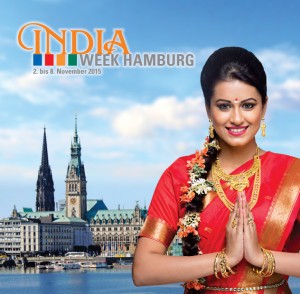
 „Hamburg will celebrate the sixth India Week from 2nd to 8th November this year. More than 60 events covering economy, culture, science and education, politics and society will showcase the profound expertise in Hamburg relating to India.

Indo-German Economy
„What started as an initiative of the German-Indian Round Table (GIRT) in 2007, has become an institution over the years. Due to its growing size and wide range of topics, the event takes place every two years since 2009 and is organized under the lead of the Senate Chancellery together with the Ministry of Culture in Hamburg, the Hamburg Chamber of Commerce, the HWF Hamburg Business Development Corporation and the German-Indian Round Table as well as the Hamburg Representation Mumbai. Another important partner is the Consulate General of India, Hamburg.
„The purpose of India Week Hamburg is to display the multiple ties between Hamburg and India, strengthen existing partnerships and create new opportunities for cooperation. All those institutions, universities, companies, NGOs and others who are involved with India are invited to contribute. […]“
„[…] In the economic sphere, the Indian government has triggered many processes of change. Hence, during India Week Hamburg 2015, experts from Germany and India will provide a professional audience with the latest updates and discuss the specifics of doing business with India. To understand the Indian consumer is crucial for successful market entry and will be a focal topic of discussion. The legal framework will be an issue as well as the impact of the new investment policy “Make in India”. Potential German investors will receive in-depth information on tax regulations and the latest developments in Foreign Direct Investment. The issues of energy supply and renewables will be discussed as well as life sciences. The ongoing shift towards digitalization will be picked up by looking at digital ecosystems, mobile and e-commerce in India or the media’s search for online gold. […]“
Developments in Indian Foreign Direct Investments
Developments in foreign direct investments (FDI) in India in the wake of the new government in Delhi is the topic of a panel discussion at law firm Taylor Wessing in Hamburg. The event, co-organized by Taylor Wessing and German-Indian Round Table (GIRT) Hamburg, will take place on November 5, 2015 between 17:30 and 20:00 hours and is a part of the India Week Hamburg 2015.
8. Forum Claussen-Simon-Stiftung am 5. Juni 2015
„Is simple beautiful?“ – Chancen und Risiken frugaler Innovationen
Vortrag beim ‚Forum Claussen-Simon-Stiftung‘ mit anschließender Podiumsdiskussion
5. Juni 2015, 15:00 bis ca. 17:00 Uhr, Handelskammer Hamburg, Albert-Schäfer-Saal, Adolphsplatz 1, 20457 Hamburg

Frugale Innovationen sind – vereinfacht gesagt – Produkte und Dienstleistungen, die auf der einen Seite eine hohe Erschwinglichkeit und auf der anderen Seite hohe Qualität („affordable excellence“) besitzen. Es geht also um hochwertige Problemlösungen für preissensible Kunden, die kein Geld für Funktionen ausgeben wollen bzw. können, die sie nicht benötigen. Kurzum: Es geht um eine effektive und ressourceneffiziente Anwendung. Frugale Innovationen kommen im Konsumgütergeschäft und im Geschäftskundenbereich (B2B) zum Einsatz. Beispiele für frugale Innovationen deutscher Unternehmen sind ein für den indischen Markt entwickelter Mähdrescher der Firma Claas, der BharatBenz-LKW von DaimlerBenz in Indien oder Röntgengeräte von Siemens in China. Sind frugale Innovationen nur für Entwicklungsländer mit derzeit hoher Nachfrage relevant oder gibt es auch bei uns in Europa ein wachsendes Interesse an diesen? Welche sozialen und gesellschaftlichen Entwicklungen unterstützen möglicherweise diesen Trend? Der Vortrag von Professor Herstatt wie auch die im Anschluss stattfindende Panel-Diskusion befasst sich mit diesen Fragen.
„Make in India!“ Perspectives and Challenges of the new Industrialization Policy of India’s Government
Ein Veranstaltungshinweis für den 14.4. in Handelskammer Hamburg,
09:30 - 13:00
—

Bild: Handelskammer Hamburg
In Kooperation mit der Deutsch-Indischen Handelskammer (AHK), der German Asia-Pacific Business Association (OAV) und der Hamburg Repräsentanz Mumbai laden wir Sie herzlich ein, sich über die Perspektiven und Herausforderungen der vom indischen Premierminister Narendra Modi unter dem Begriff „Make in India!“ initiierten Kampagne zu informieren.